Why Choose Tulsa?
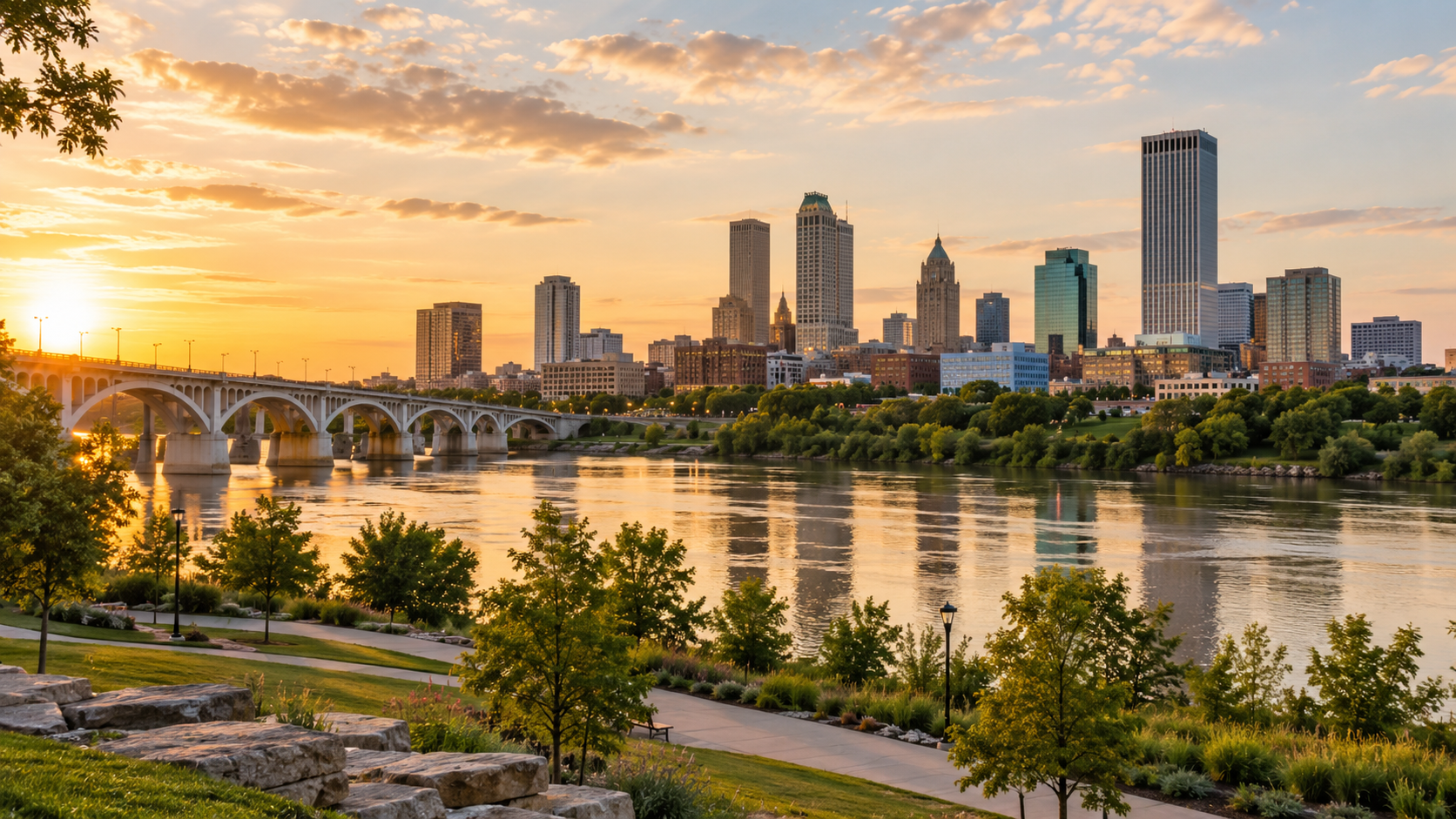
Tulsa gives residents city amenities while keeping riverfront recreation close. Additionally, its music, architecture, arts, and Route 66 heritage create a distinctive atmosphere.
Neighborhood choices range from historic central areas to newer communities farther from downtown. Therefore, newcomers can compare several lifestyles within the Tulsa area.
Cost of Living
Household costs vary by neighborhood, housing type, transportation needs, and lifestyle. Therefore, newcomers should compare housing, utilities, insurance, taxes, and commuting expenses.
Location can also affect everyday convenience. For example, central neighborhoods may reduce travel times to downtown employers and entertainment areas.
Real Estate and Housing Market
Tulsa offers historic homes, mid-century neighborhoods, apartments, townhomes, and newer suburban development. Buyers can compare central neighborhoods with newer communities farther from downtown.
Housing styles also vary considerably between districts. Consequently, exploring neighborhoods in person can help buyers understand each area’s character.
Education
Tulsa Public Schools operates 78 learning communities and several specialized programs. Options include dual-language, Montessori, early-college, and Tulsa Tech-connected programs.
Because school assignments vary, families should research enrollment before choosing a home. Nearby private and higher-education options provide additional choices.
Healthcare Facilities
Saint Francis Health System is headquartered in Tulsa and operates hospitals, specialty facilities, and clinics. Its services include primary, pediatric, heart, cancer, behavioral, trauma, and emergency care.
Therefore, residents have access to both routine and specialized healthcare. Other hospital systems and medical practices also serve the Tulsa area.
Recreation and Leisure
Gathering Place provides free riverfront recreation, playgrounds, sports areas, events, and community programming. The park connects naturally with Tulsa’s broader riverfront recreation network.
Nearby, River Parks offers extensive trails along the Arkansas River. Turkey Mountain provides more than 750 rugged acres for hiking, trail running, and mountain biking.
Dining and Shopping
Tulsa has several districts known for restaurants, boutiques, nightlife, and local businesses. Brookside combines restaurants and boutiques near Gathering Place.
Meanwhile, Cherry Street, Downtown, and Blue Dome provide additional dining and entertainment choices. Blue Dome is especially known for nightlife and downtown entertainment.
Events and Festivals
Tulsa hosts major community events throughout the year. One standout is Zeeco Oktoberfest Tulsa, held along the riverfront.
The festival includes Bavarian food, live entertainment, competitions, crafts, and family activities. River Parks also hosts running, cycling, fireworks, and other recurring events.
Transportation and Accessibility
Tulsa’s road network connects residents with downtown, surrounding suburbs, and northeastern Oklahoma. Consequently, driving remains important for many daily commutes.
Tulsa International Airport provides numerous nonstop routes. Current destinations include Dallas, Denver, Chicago, Los Angeles, New York, Seattle, San Diego, and others.
Conclusion
Tulsa combines established neighborhoods, riverfront recreation, healthcare, education, shopping, and cultural attractions. Overall, the city provides many choices for newcomers considering northeastern Oklahoma.