Oklahoma City Overview
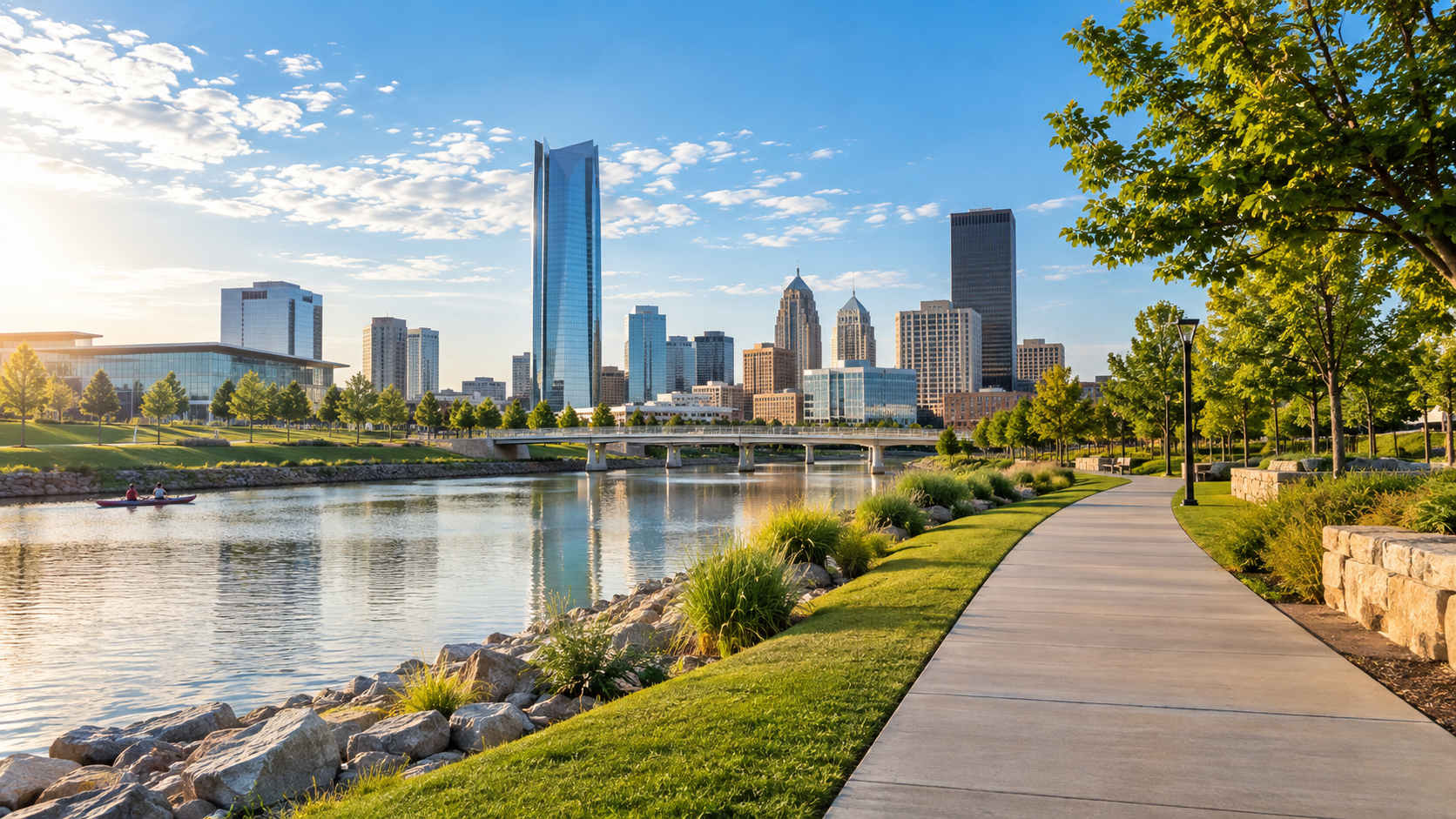
Oklahoma City combines a large metropolitan footprint with many distinct districts and residential areas. Meanwhile, Bricktown, Midtown, Paseo, and Plaza provide different dining, shopping, arts, and entertainment experiences.
Why Choose Oklahoma City?
Oklahoma City offers residents many lifestyle choices without placing major services far away. Additionally, continued downtown development has created more recreation and gathering spaces.
Families, professionals, retirees, and students can find neighborhoods suited to different lifestyles. Therefore, exploring several areas before moving can help narrow the search.
Cost of Living
Everyday expenses vary by neighborhood, housing choice, commute, and household needs. However, newcomers can compare housing, insurance, utilities, taxes, and transportation before choosing an area.
Housing location can also influence transportation costs. Consequently, living closer to work may provide additional convenience.
Real Estate and Housing Market
Housing ranges from historic homes near central districts to newer developments farther from downtown. Therefore, buyers can compare established neighborhoods, townhomes, apartments, and newer construction.
Central neighborhoods often provide quick access to dining and entertainment. Meanwhile, outer areas may offer larger lots and suburban-style settings.
Education
Oklahoma City Public Schools serves many families throughout Oklahoma City. The district provides enrollment information and tools for locating assigned schools.
Because boundaries vary, families should verify school assignments before choosing a home. Private and charter options also expand educational choices.
Healthcare Facilities
OU Health provides major healthcare and specialty services in Oklahoma City. Its facilities include adult, children’s, women’s, emergency, cancer, and specialty care.
Additionally, the city has clinics and healthcare providers throughout the metropolitan area. Residents can usually compare several options near their neighborhood.
Recreation and Leisure
Scissortail Park provides 70 acres of recreation between downtown and the Oklahoma River. The park includes trails, playgrounds, gathering areas, events, and water activities.
Elsewhere, residents can explore parks, sports facilities, museums, and outdoor areas. As a result, recreation options extend well beyond downtown.
Dining and Shopping
Oklahoma City has several districts with different dining and shopping personalities. Bricktown combines restaurants and entertainment around its canal and downtown attractions.
Meanwhile, Paseo and Plaza feature galleries, restaurants, boutiques, and locally owned businesses. Midtown offers another popular collection of shops and dining destinations.
Events and Festivals
Community events happen throughout the year in parks, entertainment districts, museums, and event venues. September also brings the annual Oklahoma State Fair to Oklahoma City.
The fair features entertainment, competitions, exhibits, attractions, and family activities. Additionally, neighborhood districts regularly host seasonal events.
Transportation and Accessibility
Interstates 35, 40, and 44 provide important connections across Oklahoma City and the surrounding region. Major roads also connect residential areas with downtown and employment centers.
OKC Will Rogers International Airport provides commercial passenger service. The airport served 4.6 million passengers during 2024 and offers numerous daily departures.
Conclusion
Oklahoma City combines housing choices, recreation, healthcare, education, shopping, and entertainment. Overall, its size gives newcomers many lifestyles and neighborhoods to consider.